





In the realm of computer networking, protocols play a critical role in facilitating the exchange of information and communication between different devices. One of the most integral protocols in this context is that protocol manages neighbor discovery processes on IPv4 networks.
Why do we Use Neighbour Discovery Protocols?
The purpose of neighbor discovery protocols on IPv4 networks is to allow hosts and routers to discover and communicate with each other, determine each other's MAC addresses, and maintain a mapping between IP addresses and MAC addresses. Essentially, the process involves a device initiating communication requests to other devices and discovering their network addresses and operational status.
This is important for the efficient forwarding of packets and for the proper functioning of protocols such as ARP (Address Resolution Protocol) and ICMP (Internet Control Message Protocol). Neighbor discovery protocols can also detect and resolve network connectivity issues, such as duplicate IP addresses or failed devices.
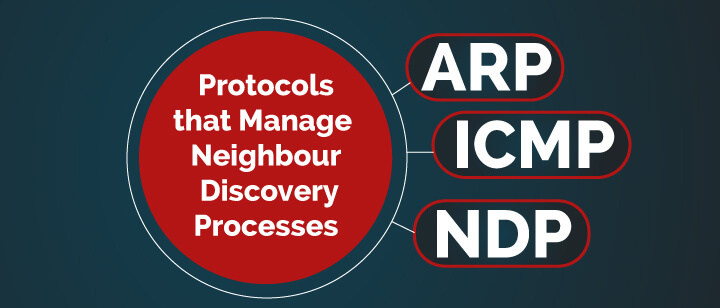
Protocols that Manage Neighbour Discovery Processes
Address Resolution Protocol (ARP)
Address Resolution Protocol (ARP) helps in managing neighbor discovery on IPv4 networks by resolving an IP address to its corresponding MAC address. When a device wants to communicate with another device on the same network, it needs to know the MAC address of the destination device. ARP allows a device to send a broadcast request to all devices on the network, asking for the MAC address of the device that has the IP address the device wants to communicate with. The device with that IP address responds with its MAC address, and the requesting device can then use that MAC address to send packets to the destination device.
Internet Control Message Protocol (ICMP)
Internet Control Message Protocol (ICMP) helps in managing neighbor discovery on IPv4 networks by providing a standardized mechanism for network devices to communicate error messages and operational information. For example, when a device wants to check if a network neighbor is reachable, it sends an ICMP Echo Request message (commonly referred to as a "ping"). If the neighbor responds with an ICMP Echo Reply message, the device knows that the neighbor is reachable. Additionally, ICMP provides messages for reporting errors, such as when a destination device is unreachable or a packet has been dropped. These messages help devices debug network problems and provide feedback to network administrators.
Neighbor Discovery Protocol (NDP)
Neighbor Discovery Protocol (NDP) is another essential protocol used on IPv4 networks to facilitate the discovery of neighboring devices. NDP operates in conjunction with Internet Protocol version 6 (IPv6) and is responsible for discovering neighboring nodes in a network, managing the address resolution protocol (ARP) cache, and providing critical information such as link-local addresses, router addresses, and DNS server addresses.
How does NDP affect Performance and Security?
Performance
NDP helps improve network performance by reducing network traffic. Since it maintains a local cache of neighboring nodes' information, it reduces the need for broadcasts and reduces the amount of network traffic. This helps in minimizing network congestion, increasing the network's speed, and improving the overall performance of the network.
Security
NDP can also have an impact on the security of IPv4 networks, as it helps prevent various network attacks. Neighbor Discovery Protocol includes mechanisms such as Neighbor Unreachability Detection, Duplicate Address Detection, and Secure Neighbor Discovery, which can help prevent various types of attacks. These mechanisms can detect invalid or unauthorized nodes within the network and prevent them from damaging the network's infrastructure. Secure NDP helps prevent man-in-the-middle attacks, where an attacker eavesdrops and alters the communication between nodes within the same network.
Challenges Facing Protocols Which Manage Neighbour Discovery Processes
- Scalability: Neighbor discovery protocols must be able to scale to large networks with a high number of nodes. As the number of nodes in the network increases, the time taken for the discovery and maintenance of neighbors also increases, which can lead to network congestion and reduced efficiency.
- Complexity: Neighbor discovery protocols can be complex to implement and manage, especially in large or complex networks. Configuring and troubleshooting these protocols can be challenging, and requires skilled network administrators.
- Compatibility: Not all devices and operating systems support the same neighbor discovery protocols, which can lead to compatibility issues in heterogeneous networks. This can result in reduced network performance and reliability, and can require additional configuration and integration efforts.
- Stability: Neighbor discovery protocols must be stable and reliable, and should not experience frequent disruptions or failures. Unstable protocols can lead to network downtime, data loss, and other negative consequences.
In conclusion, protocol manages neighbor discovery processes on IPv4 networks play a crucial role in the performance and security of IPv4 networks. They help in improving the network performance by reducing network traffic and increasing the network speed while also helping prevent various types of network attacks.