





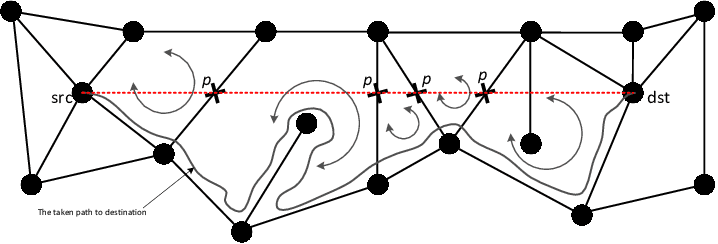
As the world increasingly relies on networked communication, the effectiveness and efficiency of routing algorithms are becoming more important than ever. At the heart of the internet sits the IPv4 protocol, and ensuring that data packet routing is optimal is a critical component of network performance. In this article, we will explore the key aspects of IPv4 routing algorithms and how they work.
What is a routing algorithm?
Understanding IPv4 routing algorithms is very important if you need to buy or sell IPv4 addresses. When a data packet is sent over the internet, it contains two essential pieces of information: the destination IP address and the source IP address. IPv4 routing algorithms are responsible for directing data packets between devices connected to the internet. In essence, IPv4 routing principles identify the best path for each data packet to travel to its intended destination. IPv4 routing algorithms use the information attached to the data packets to determine which path the data should take. Generally, data packets will travel across different types of networks, including local area networks (LANs), wide area networks (WANs), and the Internet. Each of these networks has its own unique set of rules and protocols for data transmission.
One of the most critical factors in IPv4 routing algorithms is hop count. This refers to the total number of networks that a data packet must traverse to reach its destination. The shortest hop count generally provides the fastest and most efficient path. Therefore, an essential consideration for these algorithms is to minimise the hop count.
IPv4 Routing Types
Static Routing
Static routing is a routing technique where the router administrator pre-defines the routes that the router device should use to direct data traffic. This type of routing is often used when there is a small network infrastructure, and there is no need for constant updates of the routing information. In static routing, routing tables are manually configured, and the router does not make decisions based on changing network conditions.
Dynamic Routing
Dynamic routing, on the other hand, is a routing technique that automatically updates routing tables and finds the best path for data flow based on real-time network conditions. Dynamic routing algorithms use various protocols, such as Open Shortest Path First (OSPF) and Routing Information Protocol (RIP), to enable routers to exchange information and update their routing tables.
The main difference between static and dynamic IPv4 routing lies in the automation and flexibility of the routing process. Static routing requires manual configuration of routes, and once set up, the network will always follow the same path, regardless of network changes. Dynamic routing adapts to network changes without requiring constant manual updates, allowing for efficient data flow on the network.
Moreover, dynamic routing updates routing tables in real-time, ensuring that the most efficient path is always used to direct data packets. Additionally, dynamic routing protocols have features such as cost metrics, which help determine the best path for data transmission based on network congestion and other factors.
Routing Protocols
The commonly used routing protocols in IPv4 networks are:
Routing Information Protocol (RIP)
RIP is a distance-vector protocol that uses hop count as a metric to determine the best route to a destination. It has a maximum hop count of 15, which limits its scalability. RIP is easy to configure and deploy, but it may be slow to converge and prone to routing loops.
Interior Gateway Routing Protocol (IGRP)
IGRP is a proprietary protocol developed by Cisco Systems. Like RIP, it uses a distance-vector algorithm, but it uses a composite metric that takes into account bandwidth, delay, reliability, and load. IGRP has a greater maximum hop count than RIP, making it more scalable. However, it is less widely deployed and may be more difficult to configure.
Open Shortest Path First (OSPF)
OSPF is a link-state protocol that uses a short path first algorithm to calculate the best route to a destination. It supports multiple metrics, including bandwidth, delay, and reliability, and it can handle large networks with thousands of routers. OSPF is reliable and fast to converge, but it may require more configuration and resources than RIP or IGRP.
Border Gateway Protocol (BGP)
BGP is an exterior gateway protocol used to connect different autonomous systems (AS). It uses a path vector algorithm to exchange routing information and select the best path to a destination. BGP is highly scalable and flexible, and it can provide policy-based routing and traffic engineering. However, it is complex to configure and may require significant resources
Factors Affecting IPv4 Routing Algorithms
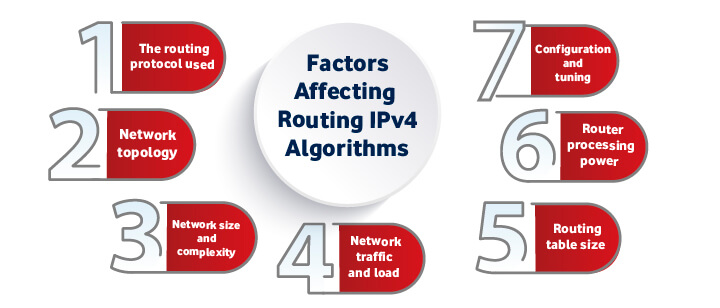
Several factors can affect IPv4 routing algorithms in a network, including:
- The routing protocol used: The routing protocol that is used, such as OSPF, BGP or RIP, can impact the performance of the routing algorithm.
- Network topology: The physical layout of the network topology can greatly affect routing algorithm performance, especially in complex or highly interconnected networks.
- Network size and complexity: As the size and complexity of the network increase, the performance of the routing algorithm may decrease due to increased traffic and the need for more processing power.
- Network traffic and load: The amount of network traffic and load can also impact the performance of the routing algorithm, especially during peak times or periods of high demand.
- Routing table size: The size of the routing table can impact the performance of the routing algorithm, especially if there are many different paths available for each destination.
- Router processing power: The processing power of the router hardware and software can have a significant impact on the performance of the routing algorithm.
- Configuration and tuning: The configuration and tuning of the routing algorithm can also affect its performance, including settings like timers, metrics, and other related parameters.
All of these factors need to be taken into account when designing and implementing routing algorithms in IPv4 networks.
In conclusion, IPv4 routing algorithms play a crucial role in the efficient functioning of the internet. They determine the best path for data packets to travel between devices connected to the Internet.
Meta Description: