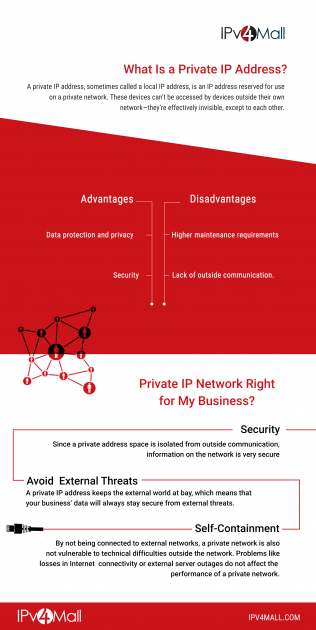



As the name implies, a private internet protocol address identifies devices on a private or closed network. The word private refers to the fact that only those devices on the network can use this IP address to communicate with each other. A classic example of it is the IP address of your residential wireless connection.
An address can either be static or dynamic. A state IP address is like your telephone number in that it stays the same unless you decide to change it. Conversely, a dynamic IP address changes occasionally, and it is most often utilized on business premises or in residences. Like any other form of IP address, the private one also has its own pros and cons. Find out those and more details about it in the following infographic.