



You, me, and everybody ever connected to the internet has used an IP address; what’s that, you may ask? Well, it's that set of numbers that allows devices to communicate with each other, and it has two versions: IPv4—the one we’ve used for decades—and IPv6—the one we’re seeking to use.
But why is IPv6 adoption picking up steam, and why is the world taking steadfast steps towards it? This is what you’re about to find out if you keep reading!
Why is the Shift from IPv4 Addresses to IPv6 Addresses Happening?
It was all sunshine and rainbows with IPv4 addresses until exactly 5 years ago (2019), when AfriNIC—an RIR—exhausted its very last pool of IPv4 addresses—Houston, we have a problem!
What does IPv4 exhaustion mean, exactly? It means that there aren’t enough unique addresses left for all the devices we now have connected to the web.
Governments, corporations, and even Internet service providers have been desperately trying to reuse and stretch IPv4 addresses as much as possible by using innovative IPv4 solutions like NAT, but these are all band-aid fixes.
What, then, is the long-term solution? IPv6 addresses.
What are IPv6 Addresses, and Why are they Taking Over the Internet World?
IPv6 (Internet Protocol version 6) was created as a long-term fix for the address shortage. It offers an almost unlimited number of IP addresses—we’re talking about 340 undecillion (that’s a 3 followed by 38 zeros). This effectively future-proofs the internet, giving enough addresses for every device and more, even in the distant future.
IPv6 adoption is slowly but surely happening; here’s why:
1. We Need More Addresses—A Lot More
The number of connected devices is exploding. Think about your household alone: phones, laptops, tablets, gaming consoles, smart light bulbs, fridges—you name it. Now scale that to every household, business, and city worldwide. It’s no wonder the older IPv4 system couldn’t keep up.
IPv6 usage solves this with its massive address space. It can easily accommodate billions of devices, even in developing regions where internet access is rapidly expanding.
The growing need for connected devices in IoT (Internet of Things) also means every new smart gadget needs its own IP address. IPv6 is the only real solution to keep up with this explosive growth.
2. Better Routing and Performance
With IPv4, the internet often relies on complex workarounds like NAT, which can slow things down and complicate connections between devices. IPv6 simplifies routing by eliminating the need for NAT. This means faster and more direct connections between devices, improving overall performance.
It basically streamlines the way data travels across the internet, enabling quicker and more efficient communications, especially as networks develop globally.
3. Enhanced Security
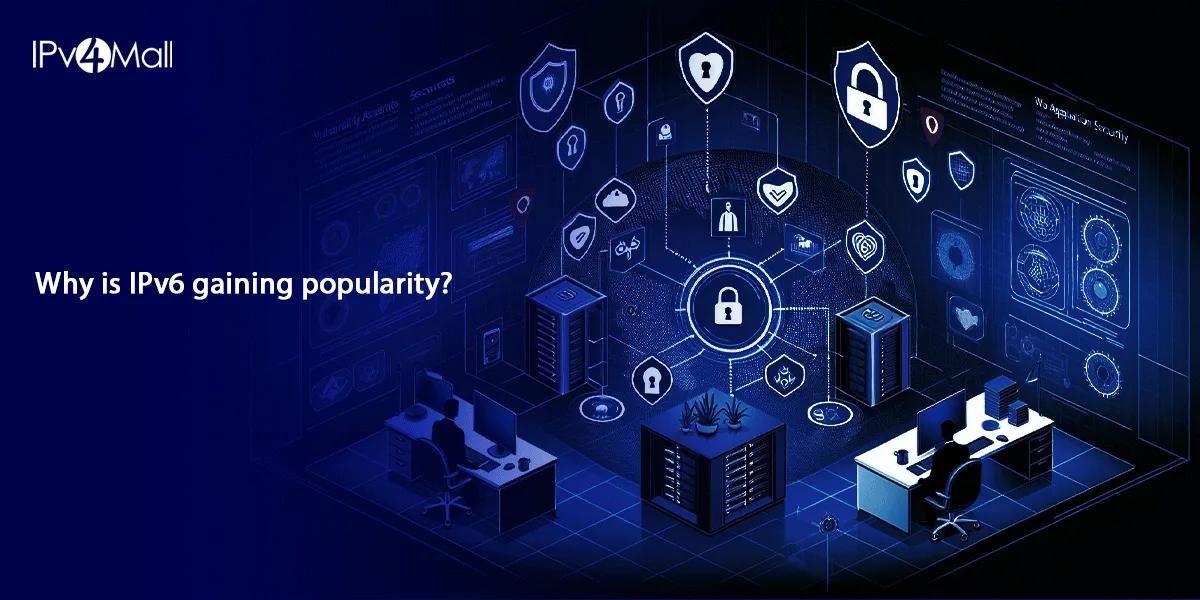
Built-in security is one of the key features of IPv6 addresses. While it is true that IPv4 does have the capability to accommodate safe communication through add-ons such as IPsec, IPv6 had security baked into the protocol from the start. With IPsec encryption mandated in device-to-device transfers, data will be far more secure.
This becomes very important in today's world, where the frequency and sophistication of cyberattacks are on the rise. Integrating security into the very structure of the internet protocol means that sensitive data will be protected more effectively.
4. Better Support for Modern Networks
IPv6 isn't just about addressing; it comes with other features that make it more suitable for the modern-day internet. For example, it has improved packet handling, and inherently, this means data can move with higher speed and lower errors.
Besides that, IPv6 also facilitates auto-configuration. This means that devices using IPv6 can assign themselves IP addresses automatically without needing a DHCP (Dynamic Host Configuration Protocol) server to do it.
5. Long-Term Sustainability
The world is moving towards IPv6 addresses because it’s the only sustainable option. As we continue to connect more devices and build more sophisticated networks, we need a protocol that can handle that growth without breaking.
IPv4’s days are numbered—its address space is too limited, and the workarounds are getting more and more complicated.
While IPv6 adoption has been slow (after all, change is hard), we’re reaching a tipping point. Governments, internet service providers, and tech companies are all pushing for IPv6 adoption to ensure a smoother transition.
6. Growing Support from ISPs and Big Tech
Internet service providers (ISPs) are slowly but surely transitioning to IPv6 addresses. Major companies like Google, Facebook, and Microsoft have been using it for years.
As more ISPs and major tech players make the switch, IPv6 will become more of a default. This momentum is growing every year as networks expand and more devices connect online.
Why Haven't IPv6 Addresses Fully Taken Over Yet?
If you’re wondering about the history of IPv6 and asking yourself, “When was IPv6 invented?” You’d be surprised to know that it has been around since the late 1998s.
It’s fair to wonder why, if IPv6 is so much better and has been around for long, we aren’t all using it already. The short answer? It’s complicated.
The transition from IPv4 to IPv6 is not like flipping a switch. Many networks, applications, and devices were designed with IPv4 in mind, and converting everything to support IPv6 can be a big and expensive project. That said, there's progress. Gradually, more networks and devices are becoming IPv6-compatible.
The bottom line is that while IPv6 adoption might sound complicated, it's really just a way to make sure the internet can keep growing and serving us all. It's like ensuring that the city has enough room for everyone who wants to live there.
FAQs
- What is the state of IPv6 adoption?
While steadily growing, IPv6 adoption is still below 50% globally. This is due to challenges like dual-stack support, compatibility issues, and infrastructure costs.
- Why is IPv6 adoption important?
IPv6 is crucial for addressing IPv4 address exhaustion, improving network efficiency, and supporting future technologies. It's the future of the internet.