






What Is a Static IP: Understanding the Basics of Static IP Addresses
In the vast world of internet connectivity and networking, IP addresses play a crucial role in identifying devices and facilitating communication. One type of IP address that often comes up in discussions is a static IP address.
At its core, a static IP (Internet Protocol) address is a fixed, unchanging numerical label assigned to a device connected to a network. Unlike dynamic IP addresses, which can change each time a device connects to the network or periodically, static IPs remain constant.
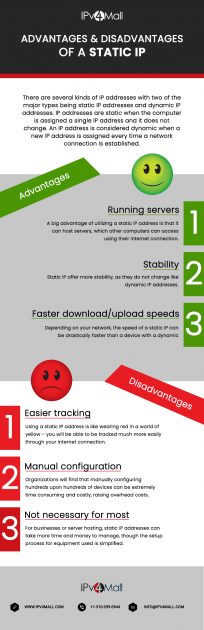
Static IP addresses have their own distinct advantages and disadvantages. This infographic will delve into the advantages and disadvantages of a static IP address and help you understand whether it’s the right choice for your network configuration needs.
By exploring these pros and cons, you will be able to make an informed decision about whether a static IP address is right for your network.
FAQs
Q: What is the difference between a static IP address and a dynamic IP address?
A: A static IP address remains constant and does not change, while a dynamic IP address can change each time a device connects to the network or periodically.
Q: What are the advantages of using a static IP address?
A: Static IP addresses offer reliable network communication, improved performance, and easier access to devices or services within a network.
Q: Are there any drawbacks to using a static IP address?
A: Yes, there are a few drawbacks. Static IP addresses can be more expensive, may limit device mobility, pose higher security risks, and require a more complex setup compared to dynamic IPs.
Q: In what scenarios is a static IP address beneficial?
A: Static IP addresses are beneficial when hosting websites or services that require continuous availability and when devices need to be remotely accessed within a network.
Q: Do I need a static IP address for everyday internet usage?
A: For regular internet usage, such as browsing, streaming, and emailing, a static IP address is generally not necessary. Dynamic IP addresses provided by ISPs are usually sufficient.
Q: Can I convert my dynamic IP address to a static IP address?
A: In most cases, you can request a static IP address from your ISP. However, keep in mind that it may come with additional fees.
Q: Is a static IP address more secure than a dynamic IP address?
A: While a static IP address can be associated with higher security risks due to its unchanged nature, implementing robust security measures can mitigate potential vulnerabilities.
Q: Can I change my static IP address once it's assigned?
A: Yes, but changing a static IP address typically involves contacting your ISP and requesting a new one. The process may differ depending on the ISP's policies.
Q: Can I use a static IP address for my home network?
A: Using a static IP address for a home network is possible, but it is often more common in business or advanced networking environments.
Q: What should I consider before opting for a static IP address?
A: Consider factors such as your specific networking needs, budget, device mobility requirements, and security measures before deciding on a static IP address.